In the race to attract the world’s smartest minds, China is gaining on the US
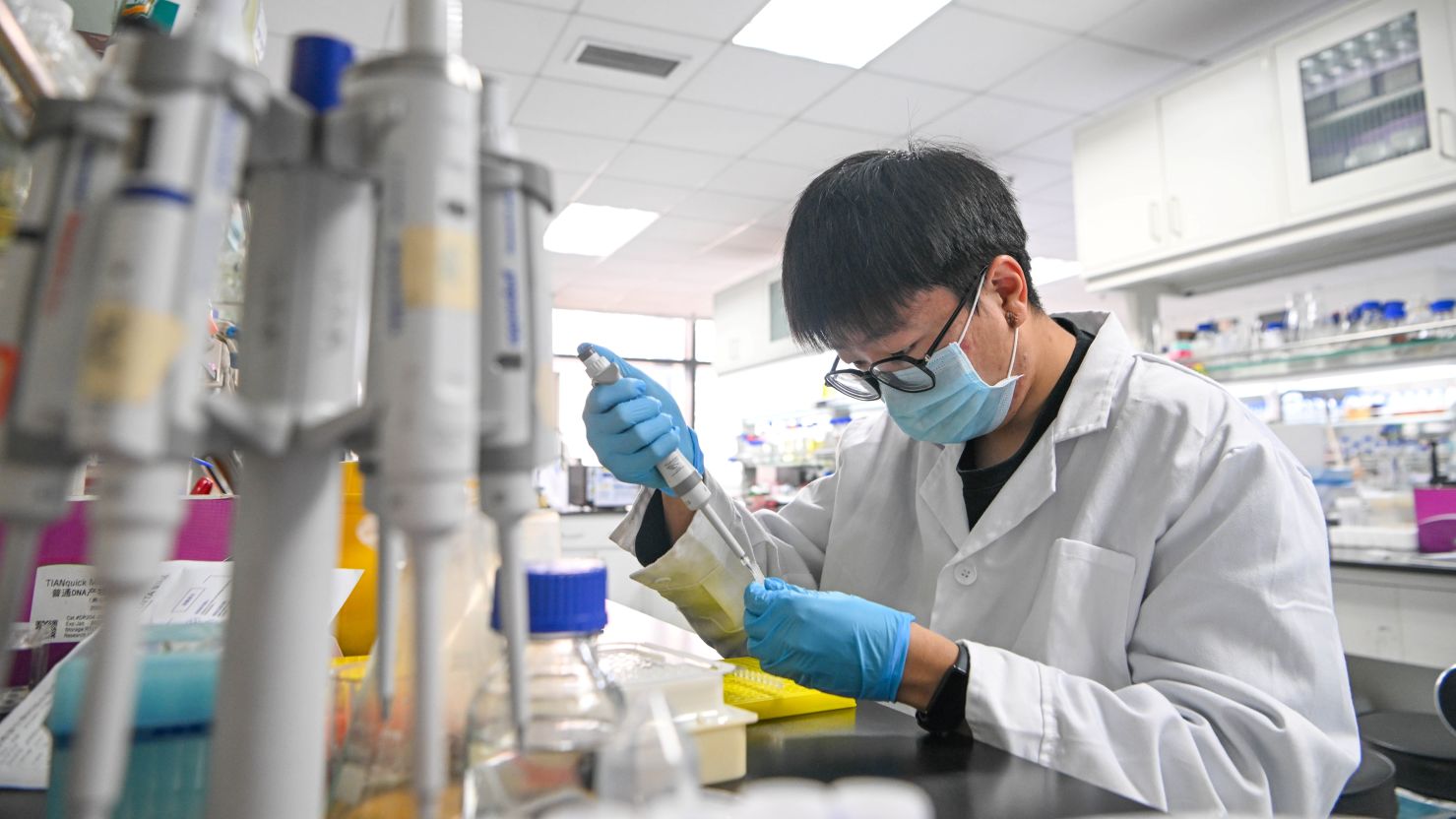
A researcher works at a Chinese Academy of Sciences laboratory in Tianjin. Sun Fanyue/Xinhua News Agency/Getty Images
Hong Kong —
A Princeton nuclear physicist. A mechanical engineer who helped NASA explore manufacturing in space. A US National Institutes of Health neurobiologist. Celebrated mathematicians. And over half a dozen AI experts. The list of research talent leaving the US to work in China is glittering – and growing.
At least 85 rising and established scientists working in the US have joined Chinese research institutions full-time since the start of last year, with more than half making the move in 2025, according to a CNN tally – a trend experts say is poised to expand as the White House pushes to slash research budgets and steps up scrutiny of foreign talent, while Beijing increases investment in homegrown innovation.
Most are part of a so-called reverse brain drain that is raising questions about the US’ long-term ability to attract and keep top-tier foreign scientists – a singular quality that has underpinned its status as the world’s undisputed leader in tech and science throughout the post-World War II period.
And that could have an impact on the race between Washington and Beijing to dominate future-shaping industries such as AI, quantum computing, semi-conductors, biotech and intelligent military hardware.
CNN
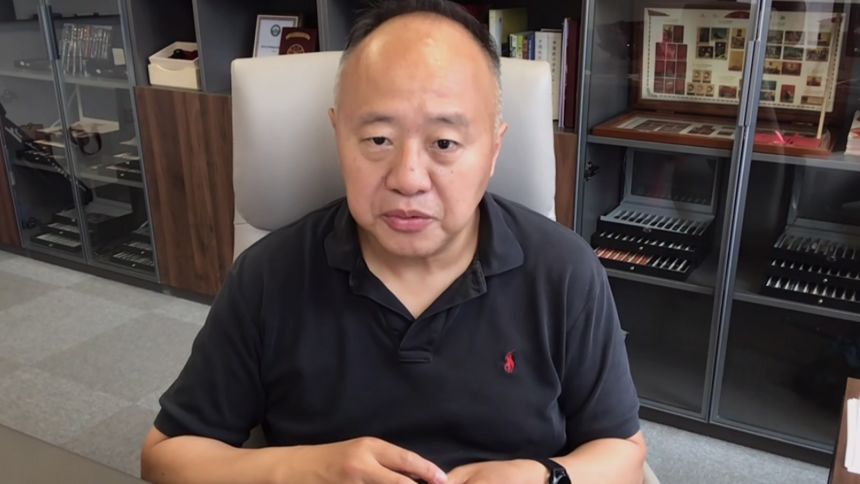
Harvard professor explains his move to China
The Chinese government has for years looked for ways to attract talented international scientists, including the thousands of Chinese researchers who left the country to pursue advanced degrees in the US and other countries, many of whom went on to become pioneers and leaders in American science and technology.
That mission has only become more critical as the US maintains tight tech controls over China, and Chinese leader Xi Jinping increasingly sees the country’s ability to innovate as the only path to economic security.
Now, as the administration of US President Donald Trump pushes for massive cuts to federal research budgets, ramps up government oversight of research, dramatically hikes the price of H1-B visas for specialized foreign workers, and uses federal funding as leverage against universities, the mission is getting a boost.
Chinese universities see changes in the US as “a gift from Trump” that will help them recruit more and higher-caliber talents, according to Yu Xie, a Princeton University professor of sociology, who spoke to CNN while visiting Chinese universities earlier this year.
“You will see a proliferation of new, strengthened and improved research programs and training programs, in all different areas within China,” Xie said.
One headhunter in eastern China, who focuses on recruiting overseas tech experts for the commercial sector, including the semiconductor industry, told CNN changes in the US could boost applications for a government-backed funding program he specializes in.
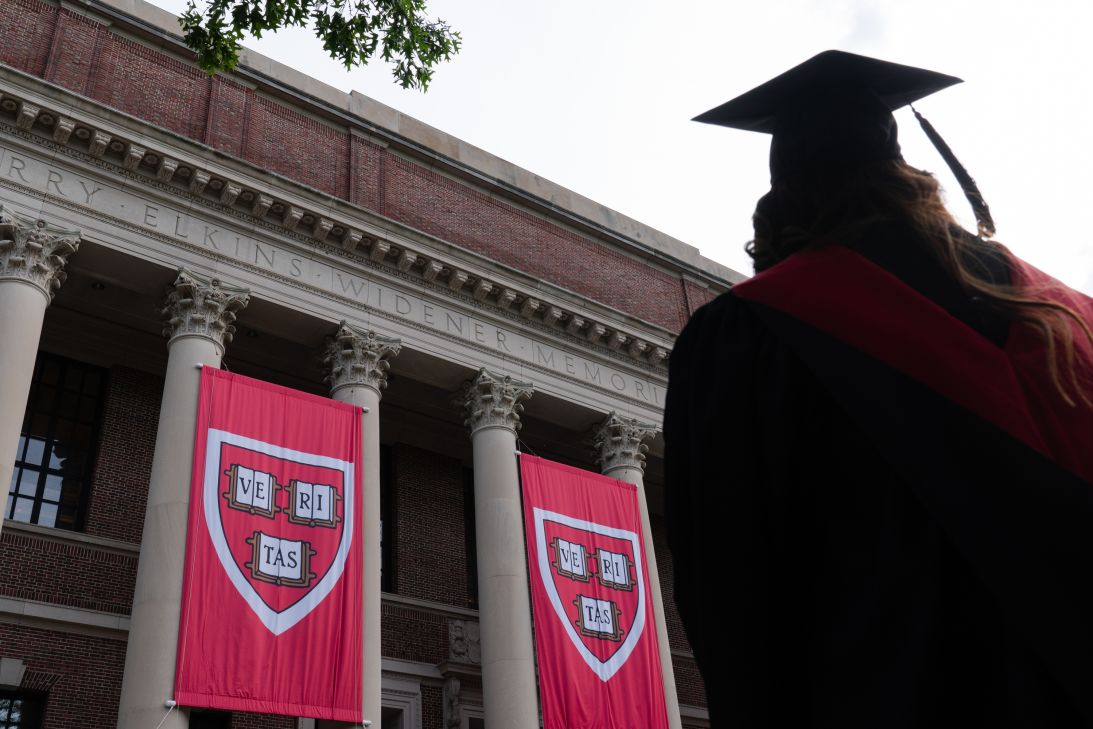
A student in front of the Harry Elkins Widener Memorial Library on the Harvard University campus in Cambridge, Massachusetts, on Tuesday, May 27, 2025.
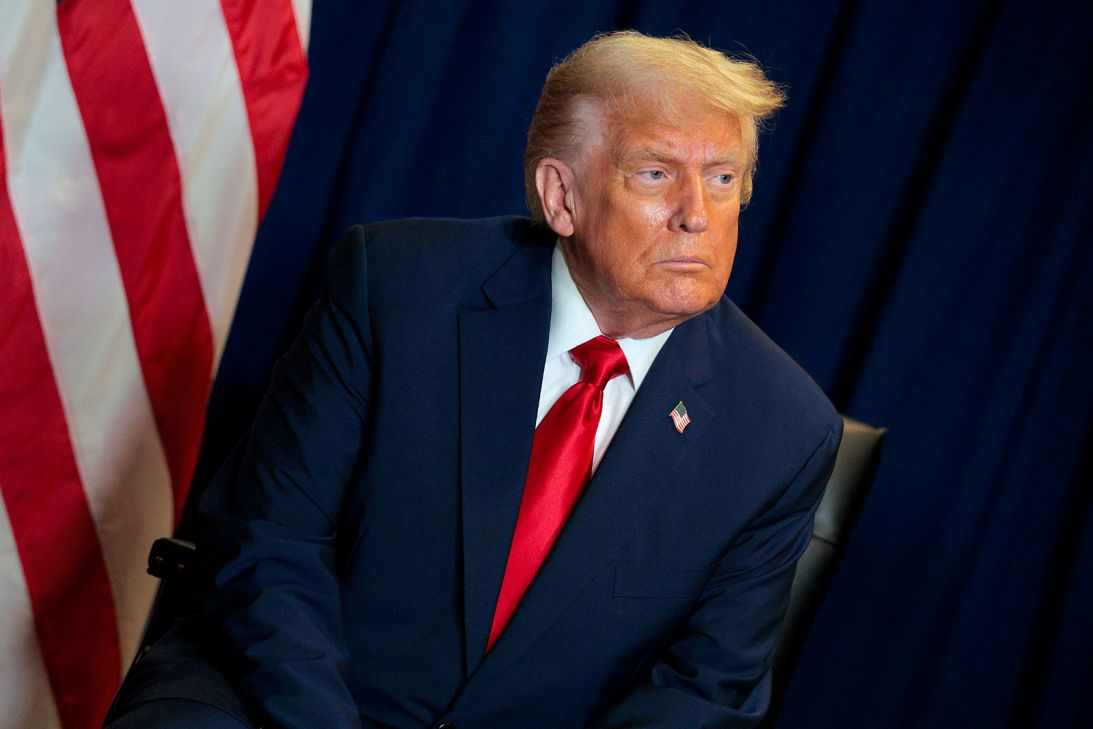
US President Donald Trump looks on during a meeting at the 80th session of the UN’s General Assembly in September.
The US Congress is poised to reject some of the most drastic cuts to research funding proposed by the Trump administration for the coming fiscal year. But the moves to defund and reshape science in recent months – as well as heightened scrutiny of international students and researchers applying for visas – have already affected academic labs and left lasting uncertainties for scientists.
Concerns and anxieties are particularly acute for researchers with ties to China, the country that has long sent more science and engineering PhD students to the US than any other.
The Trump administration earlier this year used visas for Chinese students as a trade bargaining chip. In July, lawmakers called to reinstate the China Initiative, a highly controversial US national security program launched during Trump’s first term and later canceled following concern it fueled suspicion and bias against academics of Chinese heritage.
China has welcomed a growing number of academics from the US and around the world in recent years, as the country’s own capabilities and ambitions in the sciences have vaulted higher. And a number of the most recent moves will have been in the works prior to Trump’s return to the White House. But, together, the current shifts in America could amount to a more significant opening for Chinese institutions.
A recent newspaper editorial in Communist Party mouthpiece the People’s Daily showed how Beijing sees that opening, offering China as a “safe harbor” and “platform to excel” for Chinese and Chinese-American scholars subject to the “reckless interference” of “some Western country.”
‘Bending over backwards’
Within China’s universities, much of the response to the moment is taking place behind the scenes, people familiar with the situation tell CNN, as schools discreetly reach out to bring US-based researchers onboard.
Lu Wuyuan, a protein chemist who was a tenured professor at the University of Maryland before moving to Shanghai’s prestigious Fudan University in 2020, told CNN there was a “clear surge in the number of job applicants from overseas.”
“I know Chinese universities are bending over backwards to actively take advantage of this opportunity presented to them as a gift from a ‘perceived’ adversary,” Lu said, adding that, already, overseas-educated scientists returning to China was a “robust trend, perhaps an irreversible one.”
Liu Jun, a chair professor of statistics at Tsinghua University in Beijing who decided to return to China for family reasons in 2024 and took on his new position after retiring from Harvard this year, said there was not a “systemic attempt” in light of changes in the US. Rather, individual departments like his own “definitely like to take advantage of these opportunities,” he said, by reaching out to colleagues and using conferences to spread a message that they are building up their departments.
Some recruitment efforts are visible online. A social media post from Wuhan University earlier this year invited “talents from all over the world to apply” for professorships.
An accompanying pay scheme showed how those focused on robotics, AI or network security could earn the most from the school’s dedicated research funds and pledged to match national grant funding of up to 3 million yuan (over $400,000).
Such offers, which can include perks such as priority access to research funding, bonuses, housing stipends and family support, are annually promoted by universities across China and often tie in to the central government’s fund for “outstanding young talent” from overseas.
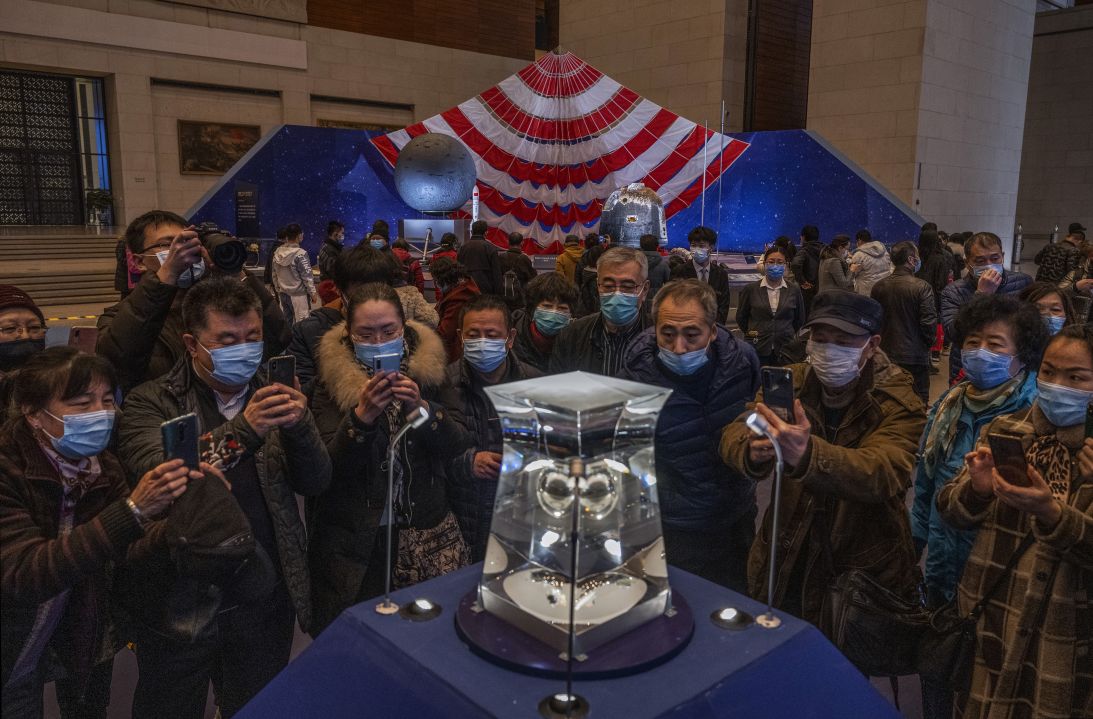
Spectators in Beijing gather around a case holding lunar rock and debris collected by a mission of China's space program, seen here on display in 2021.
Robot players compete in the AI-powered robot football match in Beijing earlier this year.
The program is part of a well-established network of grant and recruitment programs in China, seen within the country as prestigious awards, which experts say are often available to both domestic and overseas researchers.
And not all are focused on academia.
The Qiming program, for example, looks to inject top-level researchers into China’s commercial tech sector, typically requiring applicants to have doctorates and foreign work experience, according to recruitment posts reviewed by CNN and interviews with two recruiters for the program.
One of those headhunters told CNN that professionals with experience in semiconductors were a key focus in his province Jiangsu, where an already strong chip-making industry is under pressure to innovate after the US clamped down on exports of the critical technology.
“Since the US has been ‘bottlenecking’ us, now everyone (is focused on) the integrated circuit field… (The demand for talent) in integrated circuits knows no regional boundaries – everyone needs it,” according to the headhunter, who said his recruits have typically been from Europe, due to his own personal connections. He asked not to use his name in this article, citing the sensitivity of his work.
In the coming year, focus may also shift to include “artificial intelligence and quantum science, particularly in quantum communication and precision measurement,” he added.
China’s government is also expanding avenues for researchers to come to the country.
The Qiming program held an extra intake round over the summer, exclusively for talent from the US and Europe, according to the Jiangsu headhunter, who called it an “unprecedented” move.
Last month, officials announced they would introduce a new visa category for young science and technology talents, dubbed the “K visa,” effective October 1. In July, the National Natural Science Foundation opened an additional round of applications for a program offering research funding for “outstanding young talent” from overseas, on top of the regular annual intake at the year’s start.
The US government has for years seen Chinese programs to attract talent as a threat, with the FBI describing them as part of an effort to steal foreign technologies to advance Chinese government and military goals. China’s Thousand Talents program – which experts say often resulted in professors taking up part-time or research roles in China rather than relocating – was at least nominally phased out in recent years after participants faced intense scrutiny from the US, including as targets of the China Initiative.
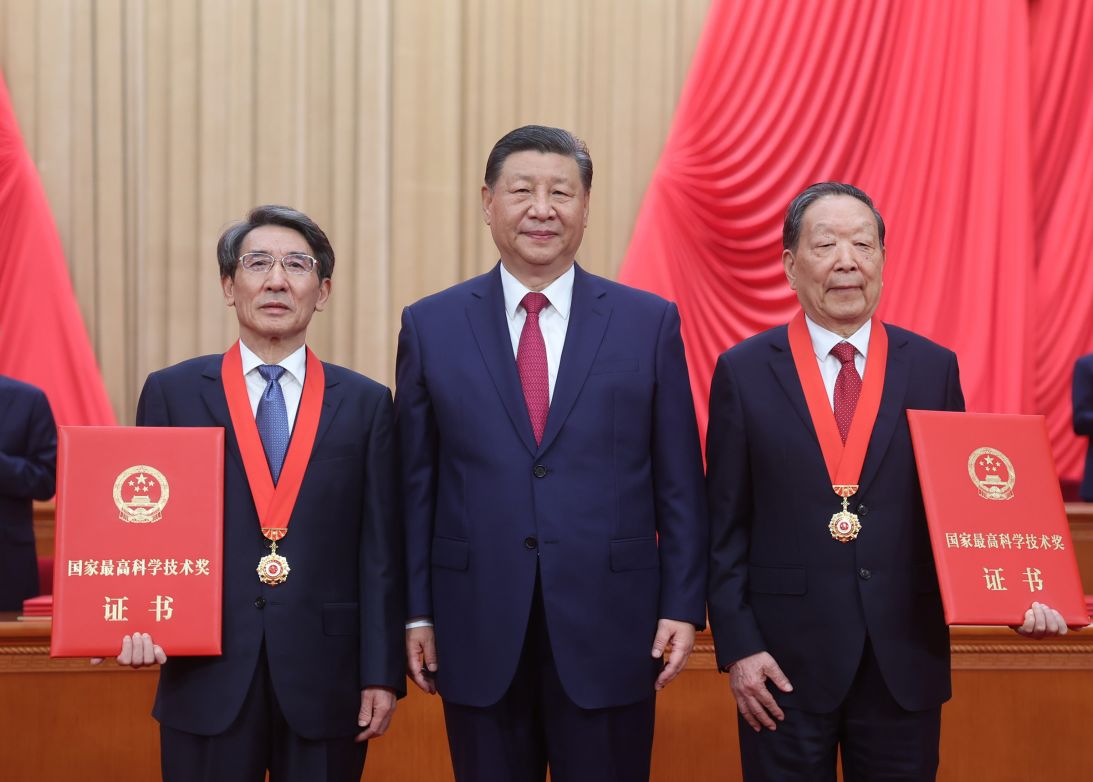
Chinese leader Xi Jinping, center, presents medals and certificates for China's annual top science and technology award in Beijing last June.
‘A nation thrives’
China’s long-standing efforts to retain and recruit talent are also helped by another factor: the country’s own economic rise and its growing scientific prowess.
That transformation has been witnessed by Lu, the Fudan University protein chemist, who said that when he decided to continue his graduate studies in the US in 1989, China was “poor, resources-stricken, and scientifically and technologically backward.”
“I would not have had the same opportunities to grow as an academic researcher had I stayed in China at that time, for which I am forever grateful to my adopted country,” he said.
But much has changed in China in the decades since, as the country’s economy grew rapidly and the government ramped up spending on research and development. In 2023, China spent more than $780 billion on research and development, compared with roughly $823 billion from the US, according to the most recent OECD data, measuring gross domestic expenditure.
“A nation thrives when its science and technology thrive,” Chinese leader Xi Jinping told an audience of academics, top scientists and senior officials in Beijing during a landmark speech last summer. The country would become a “strong” and self-reliant nation in science and technology by 2035, Xi vowed.
Already those efforts are paying off. China’s ambitious space program last year brought back the world’s first samples from the far side of the moon; the country is at the cutting edge of fields like renewable energy and quantum communications as well as military technologies like hypersonic missiles. Earlier this year, little-known Chinese start-up DeepSeek shocked Silicon Valley with a chatbot it said could roughly match the performance of OpenAI’s o1 model at a fraction of the cost.
Today, Chinese scientists are publishing more research in high-quality natural and health sciences journals than their US peers, according to the Nature Index, while Chinese universities have climbed into the rankings of the top 50 in the world.
Even still, China has a long way to go to catch up with the US in terms of being a pre-eminent science power, experts say, and its research and development push could be impacted by its own slowing economy. Some also point to how the ruling Communist Party’s controls across industry and academia make for an altogether different atmosphere from the one that’s laid the foundation for American science.
And when it comes to where scientists want to live and raise families, China’s more broadly restrictive political environment and quality of life are also a factor, experts say.
The numbers bear that out. Over 83% of Chinese graduates who earned science and engineering doctoral degrees in the US between 2017 and 2019 were still living in the country in 2023, according to data from the National Center for Science and Engineering Statistics.
Meanwhile, for those scientists without a background related to China, relocating to a country that can be difficult to navigate without Chinese language skills is also a challenge. And in an increasingly nationalist China, there have also been examples of social media backlash against scientists perceived a pro-American, or who were born in China, made their careers abroad and then returned.
Yu Hongtao, dean of the School of Life Sciences at Westlake University, China’s first public-private research university, says even at a time when researchers are concerned about the future of science in the US, those interested in joining the faculty of his school should think carefully.
“If it’s a decision based only on negative factors, that is if they just want to run away from (the situation in the US), but are not looking at China as an opportunity, I would discourage them from coming,” said Yu, who spent two decades at the University of Texas Southwestern Medical Center. He pointed to challenges for those taking positions in China as well, including differences in culture and how grants are awarded.
But multiple scientists and experts interviewed by CNN stressed that a top priority for researchers is a place where they can continue their work in peace – and with ample funding. Changes in the US could shift the current dynamic, they say.
“If American universities keep on the regular pace that they have been funding… China will still take a long, long time to catch up to the same level,” said Yau Shing-tung, a renowned mathematician and Fields medalist who retired from Harvard University after 35 years and took up a full-time post at Tsinghua University in 2022.
“But if they make mistakes, and they lose the best people, not necessarily to China, to Europe and to other countries. That could be a disaster for American universities.”
‘Short-sighted policies’
Scientists who have relocated to China have cited a host of reasons – being closer to aging parents, interest in a new professional chapter, wanting to contribute to educating a new generation.
Many in the research community stress that they don’t see science as a zero-sum competition, but rather work that can benefit people across borders – and that thrives on international collaboration.
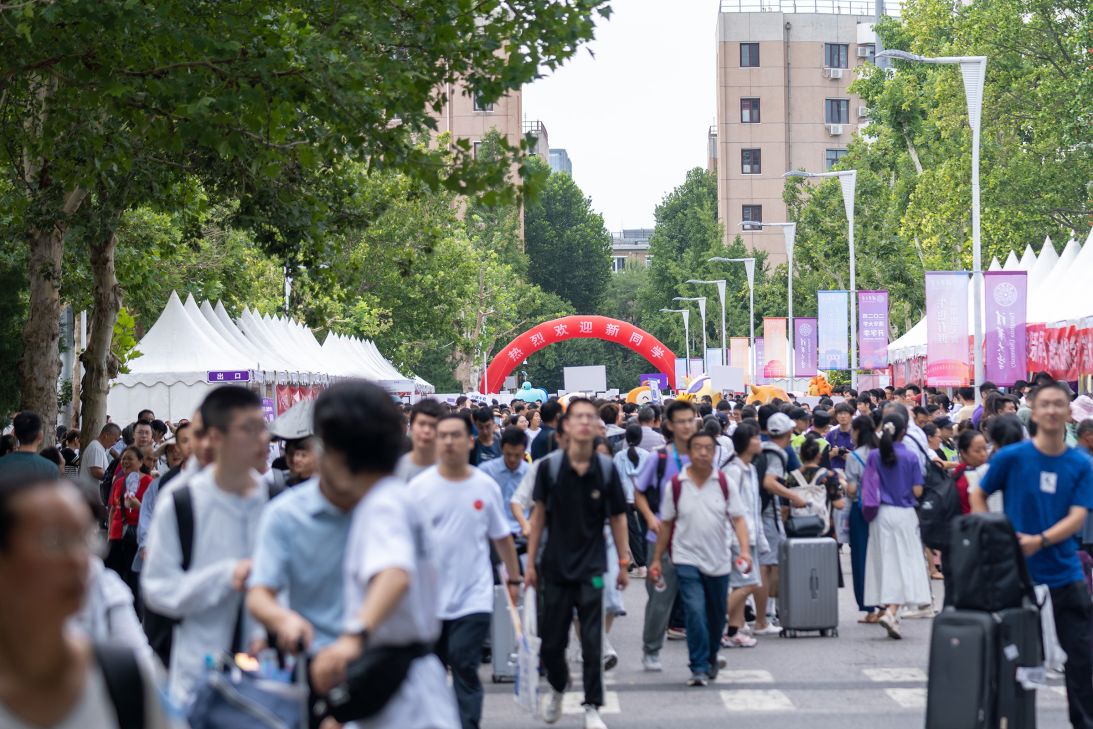
New undergraduate students arrive at the campus of Beijing's Tsinghua University last August.
“In medicine, when you find a cure, it’s a cure for everyone across the world,” said Westlake’s Yu, who added that, even still, an “apolitical decision” like where a scientist works can be now “be perceived as being political.”
That’s as a shifting climate – in which Washington and Beijing increasingly view each other as rivals – has impacted the relationship between the world’s global hub for innovation and its largest source of foreign researchers.
In a recent interview with state-backed Phoenix TV last month, acclaimed mathematician Zhang Yitang, who’d made his career in the US since 1985, linked his own decision to join Sun Yat-sen University in southeastern China this year as driven by deteriorating US-China relations.
“Many of our Chinese scholars and professors in the US have already returned, and many more are considering it,” he said.
The most pointed example of that shift from cooperation to competition was the 2018 launch of the China Initiative, which investigated alleged intellectual property theft from universities, including whether federally funded researchers had properly disclosed ties to Chinese institutions.
While probes resulted in some convictions, a number of charges were ultimately dropped, and the initiative – which drew comparisons to the McCarthy-era anti-communist “red scare” of the 1950s – was scrapped in 2022.
A July 22 letter endorsed by more than 1,000 faculty and researchers at US universities warned against a revival of the program proposed by lawmakers, saying it “served the recruitment goals of the People’s Republic of China better than any ‘talent program’ they ever implemented.”
According to 2023 research by Princeton’s Xie and collaborators, after the China Initiative was implemented, departures of US-based scientists of Chinese descent increased by 75%, with two-thirds of the relocated scientists moving to China.
Among those who left in the wake of probes during that period was Lu, the protein chemist at Fudan, who worked at the University of Maryland for two decades focusing on cancer and infectious diseases before taking up his current role.
He recounted to CNN how his research affiliations with China for years were seen as helping the reputation of his university, as well as his own research – until they became a focus of an inquiry by the National Institutes of Health. His work in China did not conflict with his federal funding, Lu said.
Now Lu, who retired voluntarily from his more than two-decade career at the University of Maryland following the NIH probe, worries about a deeper breakdown in what he says was mutually beneficial collaboration between scientists in both countries.
“Without a shred of doubt, the short-sighted policies by the current administration have effectively choked off mutually beneficial US-Sino collaboration in science,” he said.
“The irony is that the irreparable and self-inflicted harm these policies have instigated is likely far greater to the US than to China, as the latter is quickly and confidently ascending to become a scientific and technological powerhouse.”